Why we built it
After delivering two client applications back to back in late 2014, we took a couple of months to build a side project. We both loved films and disliked the clutter, adverts and single-source ratings on existing movie sites.
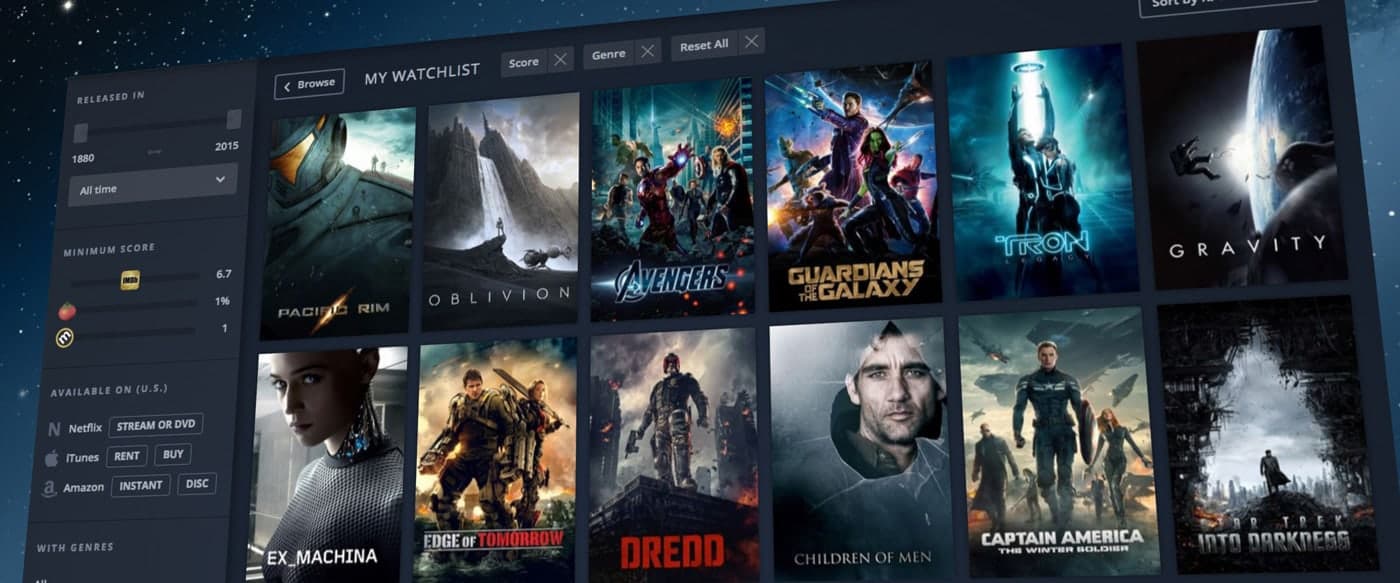
We skipped market research and started sketching filtering interfaces. Movieo grew out of the version we preferred: a simple interface for exploring films, ranked by a score combining IMDb, Rotten Tomatoes and Metacritic ratings.
Keeping the data local
Request-time calls to third-party APIs would have made browsing too slow, so we stored the movie data in our own database.
A Nokogiri-powered import system pulls from the TMDB and OMDB APIs, normalizing and merging records for more than 250,000 films. It runs daily, imports new releases and updates scores, cast details and other metadata.
Users can combine genre, year ranges, rating thresholds and other filters. Database indexing and query optimization keep responses under 100ms even for complex combinations.
Our ranking algorithm weights IMDb, Rotten Tomatoes and Metacritic scores into one "worth watching" score. Users came to trust it as a quality signal. Rails and PostgreSQL handle the application and storage; Redis caches frequently used queries and film data. Fast pages matter for both browsing and SEO.
Organic growth
We launched without a marketing campaign. Word of mouth, search traffic to the film catalog, and occasional Reddit and film-forum mentions brought people to the site.
Movieo now serves roughly 100,000 people a month, with no marketing spend. Traffic continues to grow even though we have not actively promoted it in years.
Owning and maintaining a product
We have taken Movieo through design, development, launch, user feedback, iteration and long-term maintenance. We learned to work with organic traffic, maintain a data pipeline over years and make architecture decisions as usage grew. That product-owner experience informs our client work.
We remain actively involved, improving the pipeline and scoring algorithm and adding features for movie discovery.